
State Visits

I know. I know. In the online world – even on Substack – we are supposed to be chatty, catty, short, controversial. You know, we shouldn’t take ourselves or the world too seriously.
Ok. In that case, citizens don’t matter. Experts are in charge, while we just sit around and watch, while we complain or make cynical comments.
Yes, I often do one or more of these things.
But Substack is also capable of much more – for example of carrying what used to come in speeches or magazine articles.
I think it is an interesting place to take a bit of time to lay out issues. Or draw attention to things being missed. Or for you to give your version of how institutions work or fail. Or for me to give mine.
So here is a piece on a subject rarely addressed, at least not seriously or with an intent to understand.
Hope you find it useful, even fun.
- - -
One of the most important jobs of a Head of State of any country is to travel abroad on state visits representing their country at the highest level.
Head of State to Head of State.
As I showed in a recent post – Canadian Governors General have been doing this since Vincent Massey went to Washington in 1954. In fact, long before that, British Governors General made occasional ‘sort of’ state visits. For example, the Duke of Connaught went to Washington in 1870.
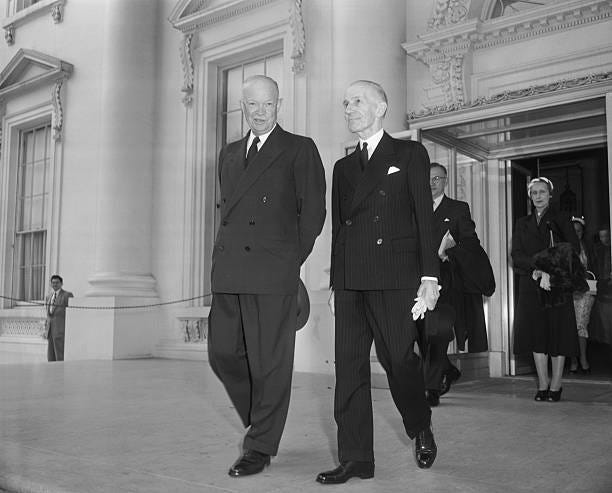
Do these visits matter?
Yes, they can matter.
They are one of the key formal international mechanisms which keep leaders talking to each other. They are made up of formulae agreed upon around the world which define how they happen. There are obligatory elements and strict timings.
This formal façade actually creates what you could call a cover for informality. In between the formal events there’s a lot of time for leaders to chat, to say things they can’t say in public, to get advice, to explain, to complain.
In most cases, the visiting Head of State stays in the State House. For example, in Canada they stay at Rideau Hall, where the GG lives. And there’s lots of time for chatting over meals or during breaks. Quite often the Prime Minister slips in quietly to join these chats. The effect of all of this cannot be measured, but it is real.
- - -
What follows here is a pictorial narrative of the Canadian GGs on state visits abroad. A far from complete list, but this selection will give you a little idea of how it works.
And I haven’t included the incoming state visits to Canada. So half the picture is missing…
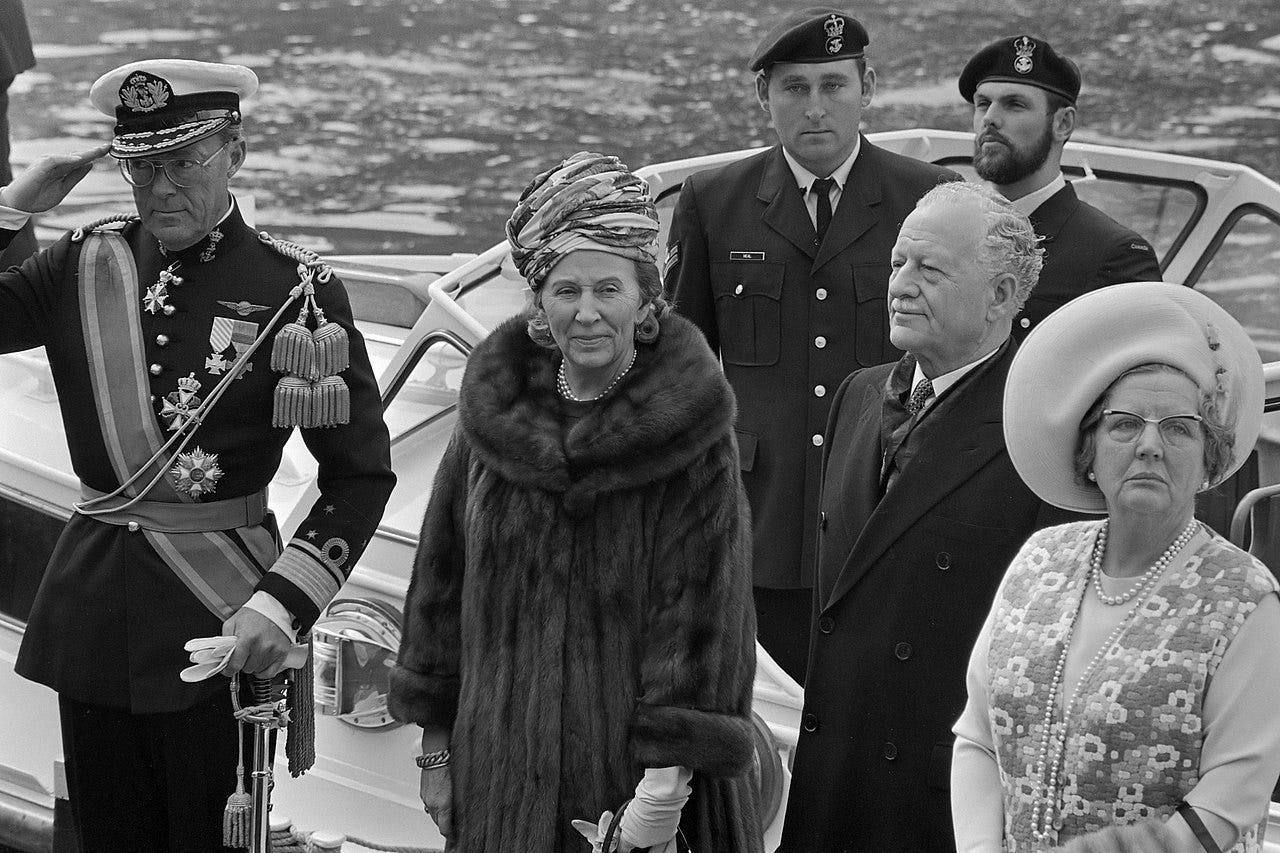
Why the Netherlands?
Part of the Dutch Royal Family spent WWII in exile in Ottawa. After D-Day the Canadian Forces led in the liberation of Europe’s north coast, including the Netherlands. My father was wounded in that running battle.
Today the Netherlands plays a central role in the EU, which should not be underestimated by Canada as it tries to develop a much closer link with the EU. Our close historic link with the Netherlands is a valuable element in Canada’s move to build EU links.
Why is this being done? In order to counterbalance our overreliance on the U.S. This U.S. obsession was a fundamental strategic mistake driven by Brian Mulroney after 1988.
Major political mistakes are easy to make. It is very difficult to undo them. We are in the midst of trying to do just that.
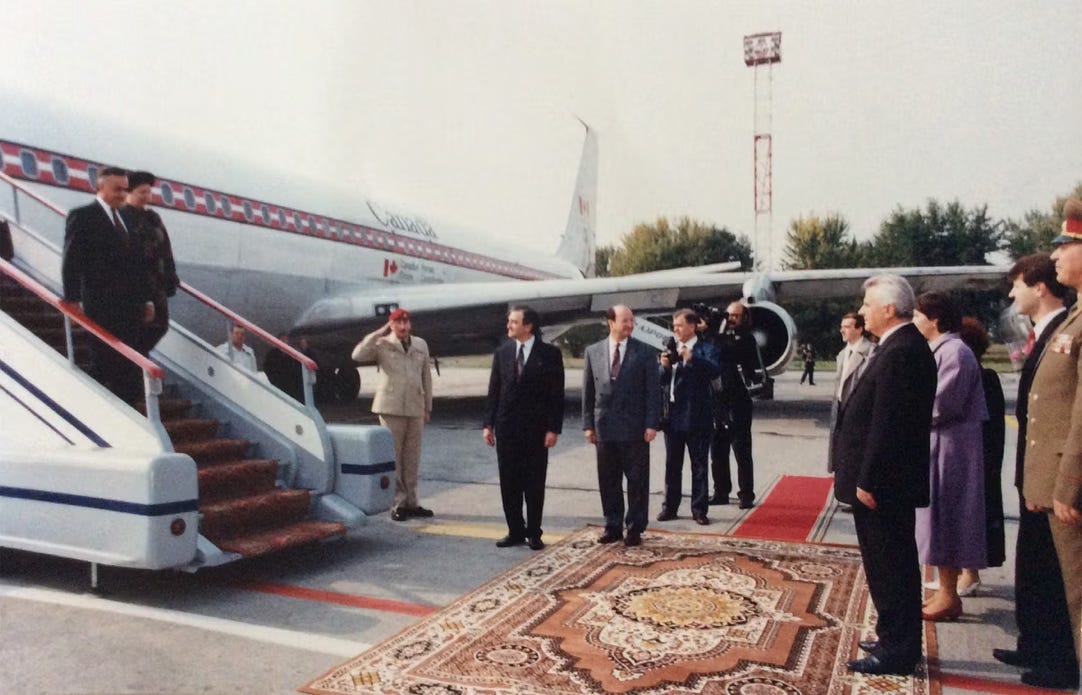
Ray Hnatyshyn’s state visit to Ukraine highlighted Canada’s support for an independent Ukraine. Our large Ukrainian Canadian community, which has a particularly influential role in our Western provinces, has taken a leadership role in encouraging Canada’s engagement.
Yes, of course, the U.S. has their own particular opinion on how Russia should be handled and therefore tries to influence the countries on its border. But Canada, ever since the collapse of the iron curtain, has played a particular role in the evolution of Ukraine towards democracy. For example, Canadian constitutional experts were central to the writing of the new Ukrainian constitution.
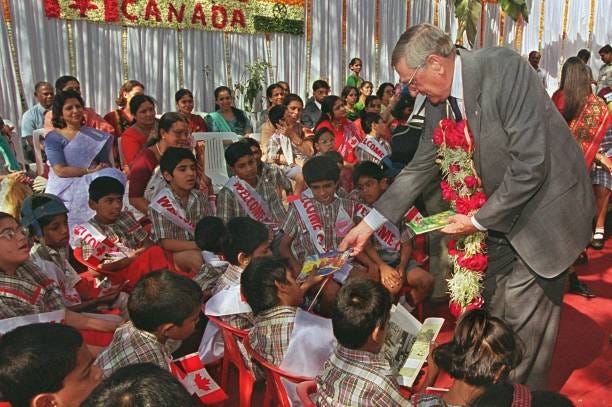
Romeo LeBlanc’s state visit to India came in two parts. The second part was Pakistan. These visits were central to Canada’s evolving foreign policy as Ottawa focused on diversifying our international relationships. And in particular strengthening relations with major commonwealth countries.
This particular visit represented a relaunching of the Canada/India close relationship which had begun with Pandit Nehru and John Diefenbaker cooperating at the 1961 Commonwealth Prime Ministers’ Conference in London. They had cooperated in order to isolate the pro-Apartheid government in South Africa. In fact, their cooperation led to South Africa leaving the Commonwealth. This was the beginning of the organized international anti-Apartheid movement, in which Canada was one of the leaders, along with India.
- - -
Adrienne and I were invited as guests on Mr. LeBlanc’s trip to India and Pakistan.
This invitation was part of a new and original approach to state visits imagined by Canada’s Department of Foreign Affairs. They asked the GGs to include in their state visits delegations not only businessmen, but also writers, playwrights, theatre directors, film producers, social policy leaders – in other words, engaged citizens in a wide variety of public areas.
Why?
Because this was a way to expand the impact of state visits by advancing a broader picture of Canada in the hope that this would lead to broader relationships with those countries.
In fact, some of those countries admired the Canadian approach and have adopted it for their own state visits.
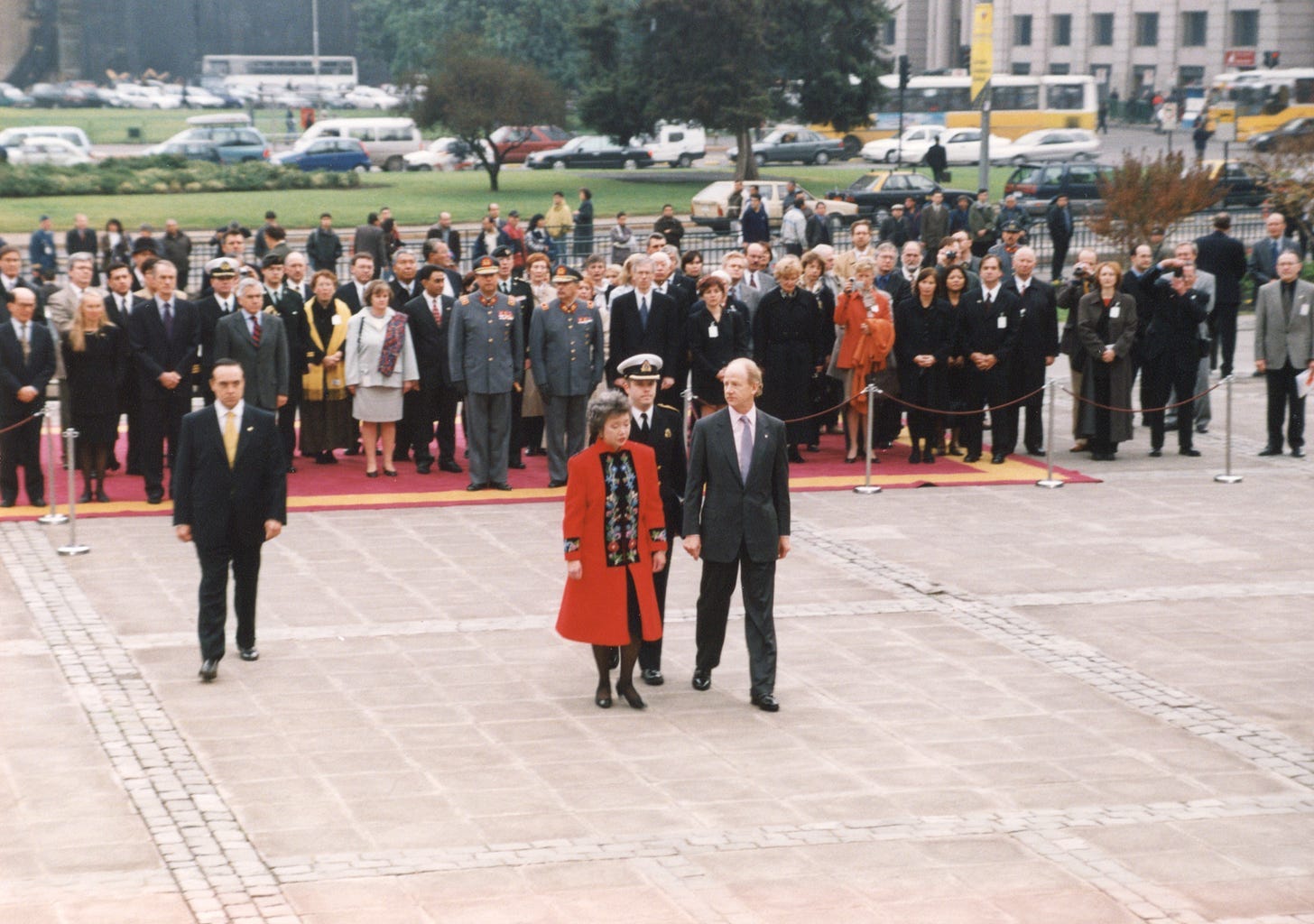
Here seen arriving at the Chilean presidential palace. The central theme of the state visit was to show support for the return of Chile’s still fragile democracy.
And to advance the more general principle that Canada should be in the forefront of supporting democracy in Latin America. This tended to put us in opposition to Washington’s view that what mattered most in Latin America was governments eager to support U.S. policies and to accept the uncontrolled influence of large U.S. companies.
Remember, Washington supported General Pinochet’s violent dictatorship all the way through.
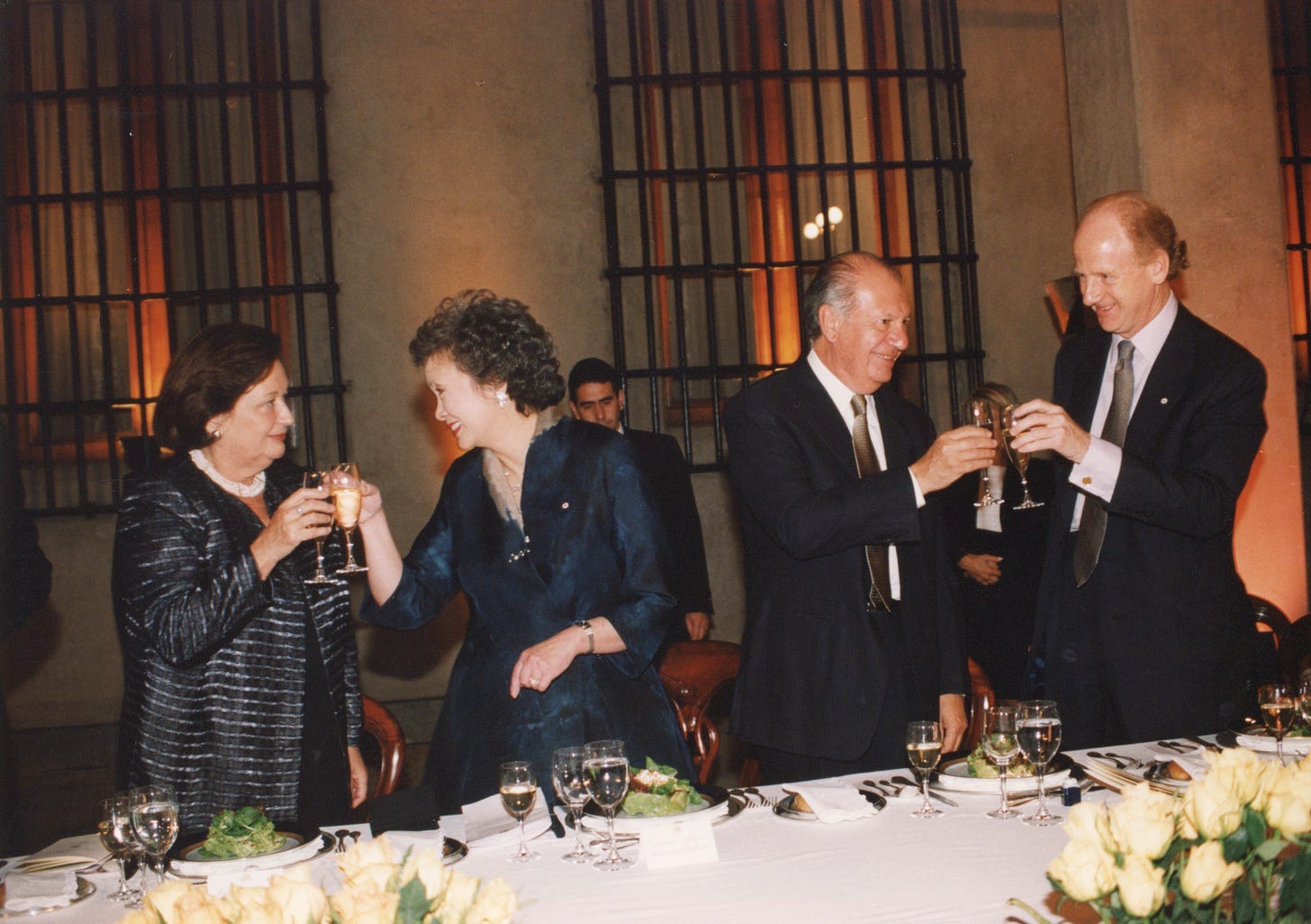
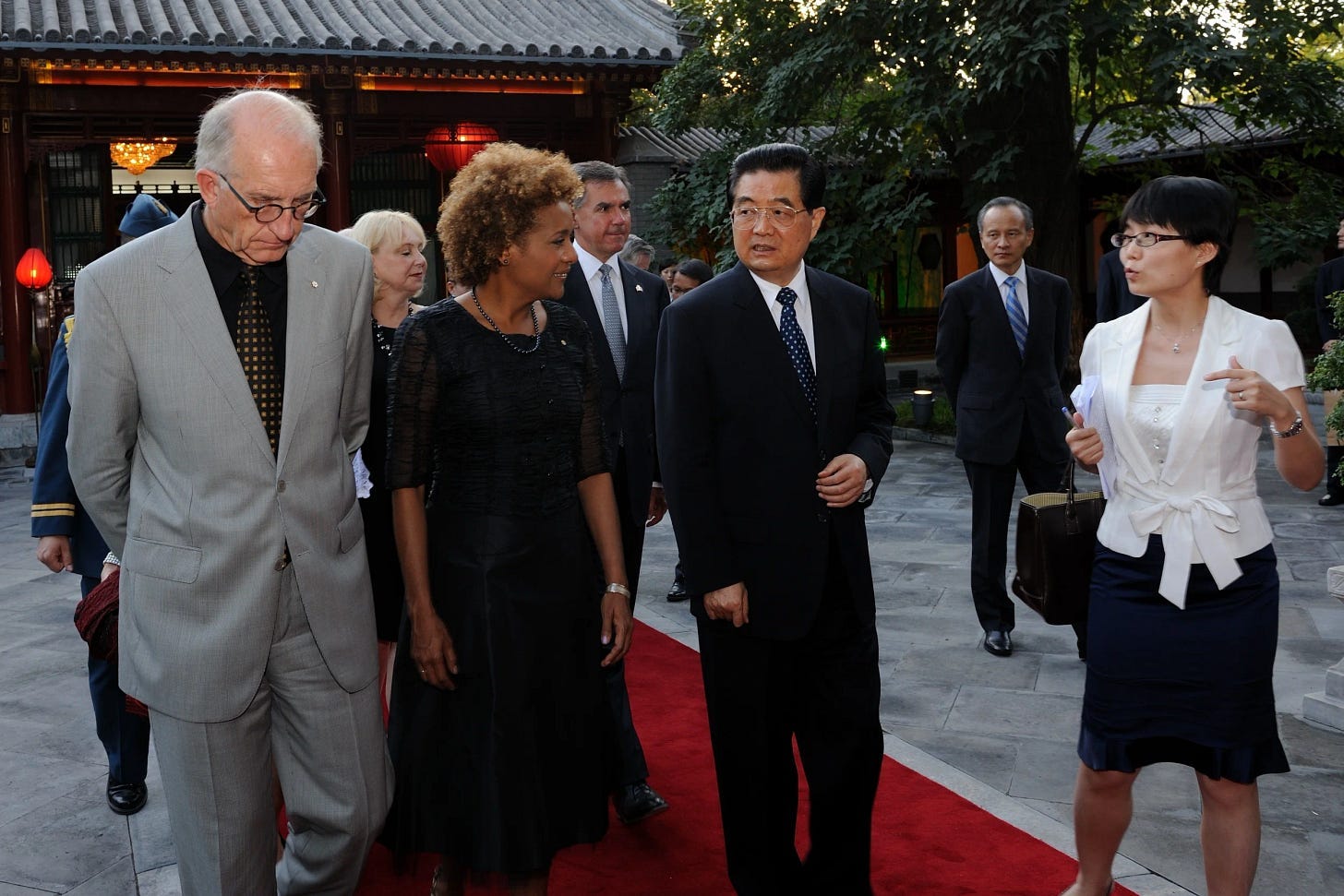
Here you see one of several attempts by Canada over the last 77 years to strengthen Canada/China relations. This is always part of diversifying our foreign relations, particularly lessening dependence on the U.S.
This doesn’t mean Canada supports China’s political or social strategies. After all, there are also economic relationships, as well as cultural and environmental, among others.
This is also an attempt to maintain Canada’s varied role in China which goes back to the late 19thcentury. It began in part with a surprising quantity of missionaries (mainly Protestant) who played a central role in advancing China’s public education, legal systems, and public social structures.
Let me add an important historic detail: Norman Bethune’s relationship with the early Mao and Zhou Enlai was legendary. Bethune was the only Westerner with whom Mao had a real relationship.
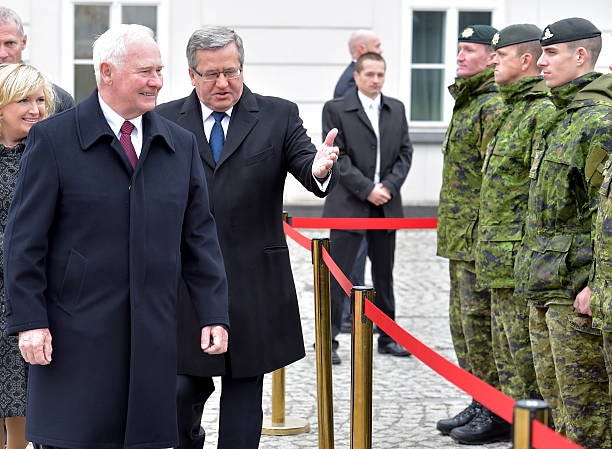
This visit was part of Canada’s foreign policy aimed at working closely with Central European countries. Why? To provide support given the constant tension on their Eastern borders in the years after the collapse of the Soviet Bloc.

This visit was part of a concerted effort to strengthen our circumpolar relations.
The circumpolar strategy has been undertaken several times – for example by Ed Schreyer in 1981 when he carried out a major state visit to Sweden, Finland, Norway, Denmark and Iceland accompanied by Canada’s Foreign Affairs Minister, Mark MacGuigan. In 1982, Schreyer also visited Greenland. Then came Adrienne Clarkson with her state visit to Russia, Finland and Iceland in 2003.
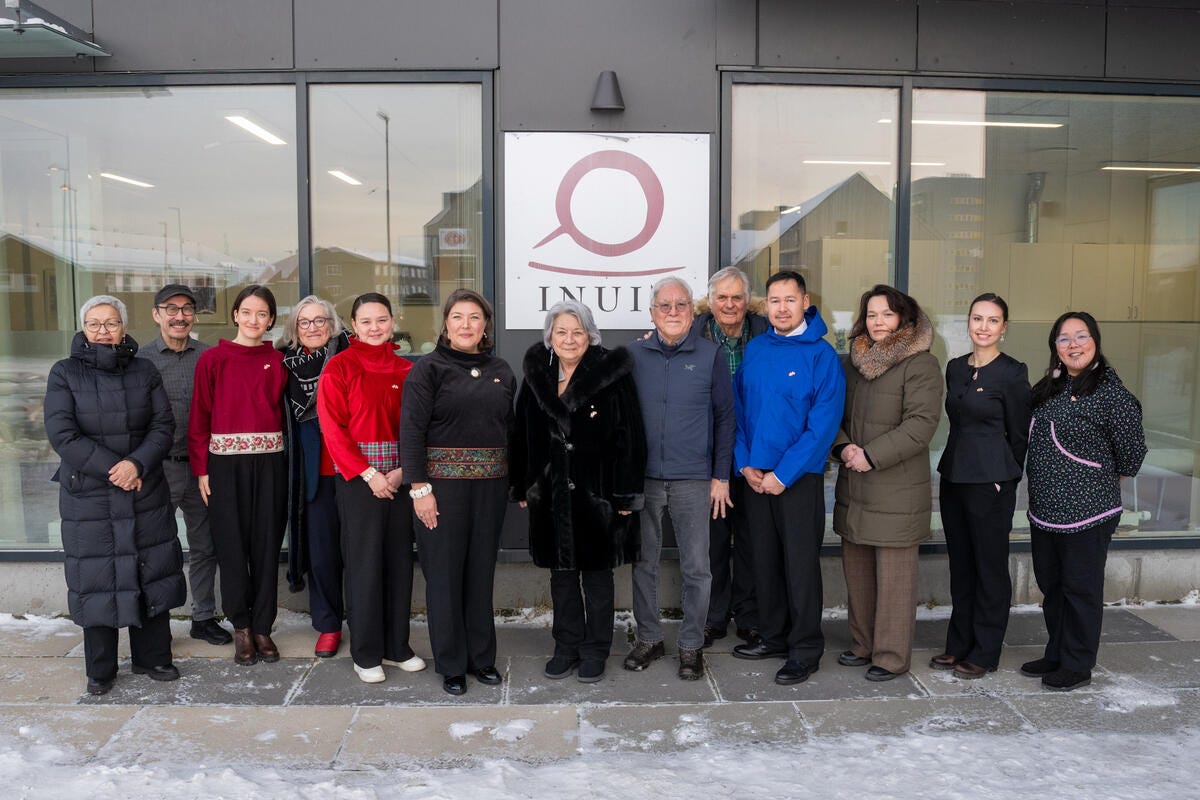
Why do I say that Canada’s circumpolar strategy has been undertaken several times? This suggests that each time it peters out.
Why?
Because the obsession of big business with only one of Canada’s four borders – the southern – keeps our strategic attention fixed in that direction. As a society we haven’t taken seriously our reality as a northern country. Things as simple as winter holidays have affected our view of how to see the world.
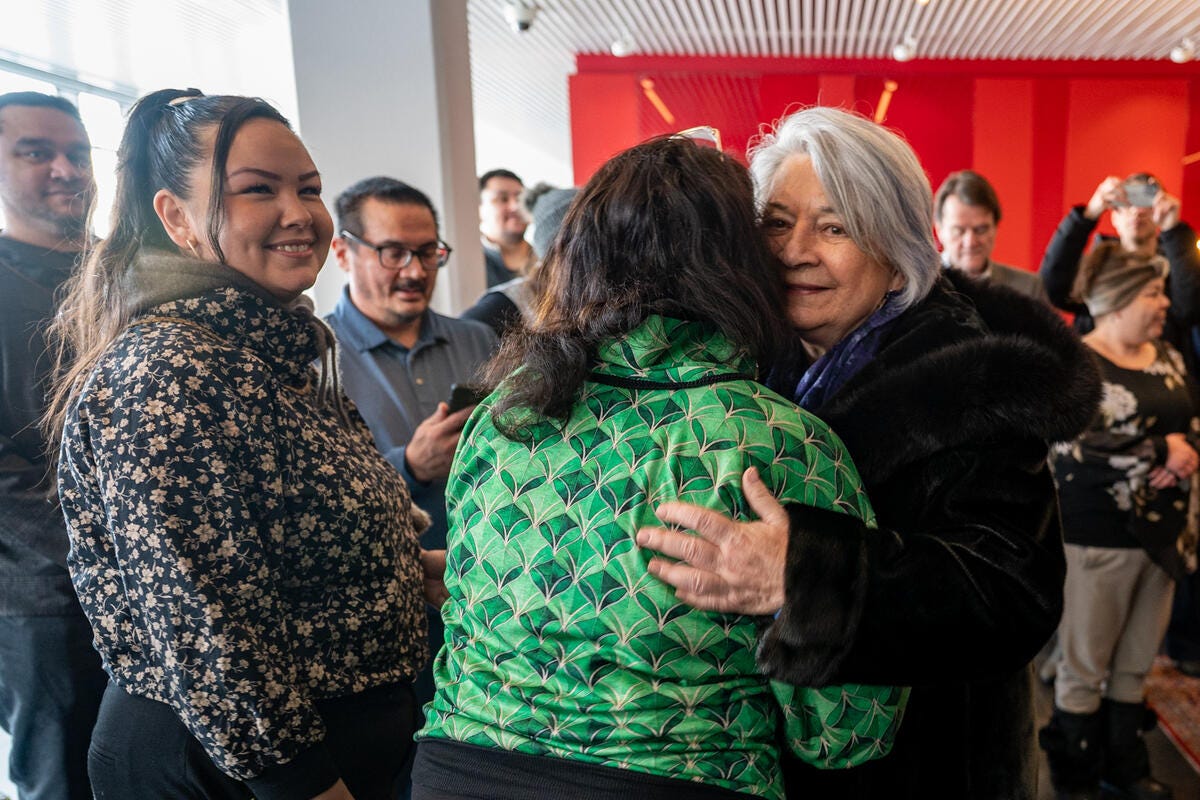
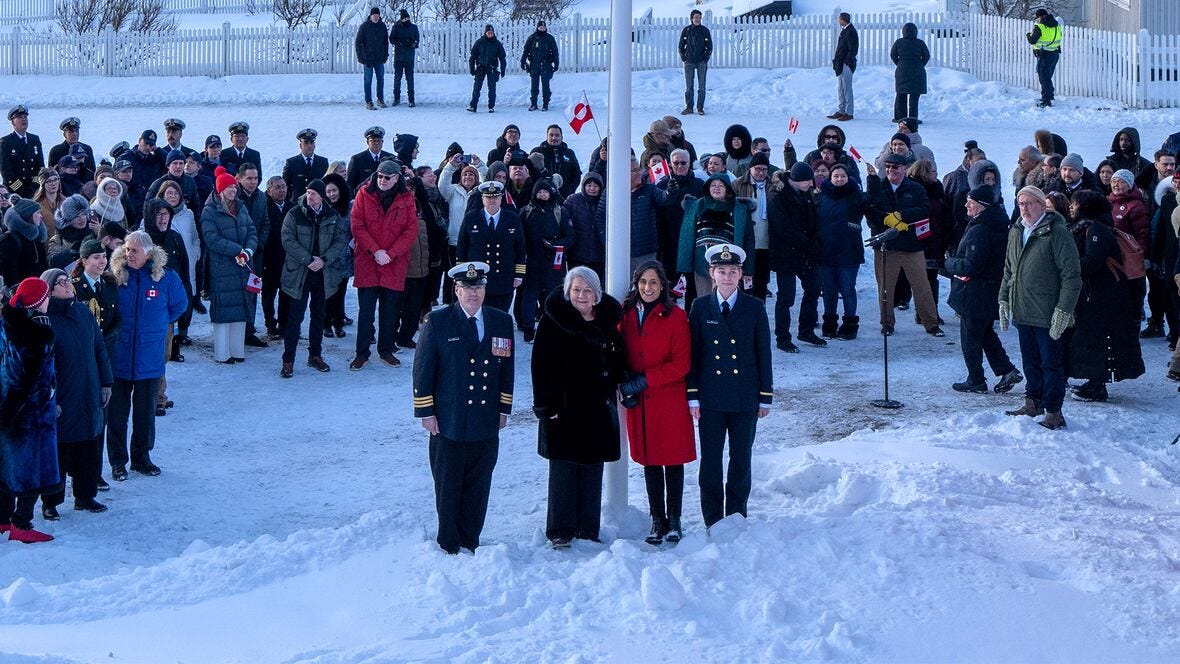
The GG’s presence in Greenland was an important statement, demonstrating that Canada stands with Greenland, against attempted imperial takeovers. By the U.S. or Russia or anyone else. The fact that Mary Simon, like most Greenlanders, is Inuk, made the impact all the greater.
- - -
What I’m attempting to demonstrate with these photos and short narratives is that state visits may look slightly arcane given that what we mainly see is the formal side. The public side. It looks very grand. But remember, that formality demonstrates publicly and clearly that the two States are engaged in building a serious relationship. The grandeur relates to the importance these countries give to their relationships; not to the individuals who happen to be Head of State at a particular moment.
Mary Simon’s visit to Greenland was a case in which the intent was particularly clear. Canada was standing with a fellow circumpolar nation against interference by superpowers.
Of course Washington had declared that it wanted to take over Greenland for international strategic reasons in defence of democracy.
As I’ve mentioned in earlier posts, superpowers always have elaborate explanations aimed at presenting imperial takeovers as offering a generous helping hand.
The British and the French empires were very good at this in the 19th and 20th centuries. Even Athens and the Roman Empire invariably presented a fancy argument to justify taking over any country or city state and removing their leadership.
I’m not suggesting that we are living in a copycat world imitating the Roman Empire. But when it comes to imperial ambitions, the attitude of great powers remains remarkably stable. They are always ambitious. And they are always in a competition of their own making for more power. And usually for more land.
All of this should give a little sense of the role state visits play for countries like Canada when it comes to negotiating solid relationships with other countries.
By the way, leaving Ottawa last week, I met a delegation of the senior Greenland leadership. We had a short chat. I had time to say that Canadians in general support the Greenlanders – our circumpolar neighbours.
I think it’s fair to conclude that the Greenlanders had been in Ottawa for discussions about the Greenland situation and Greenland’s desire to have a positive relationship with Canada. After all, Canada – not the U.S. or Russia – is their circumpolar neighbour.
This is a reminder to all of us that we have responsibilities in our neighbourhood.
Yes, we have a long southern border. But we have three very long coasts which tie us to Greenland, Scandinavia, Russia, East Asia, South Asia, and Southeast Asia.
We are part of several neighbourhoods.
To focus principally on one neighbour to our immediate south is provincial, unimaginative and deeply passive. Oh yes, and colonial.
Do we need to pay close attention to our southern neighbour? Of course. Pay attention politically and strategically. Sell them as much as we can.
But strategy is almost always about balance. About counterbalancing forces.
So we must wake up to our neighbourhoods. And take them seriously. If Greenland – one example – is threatened, we are threatened.
If our neighbours are threatened, we need to support them. We need to take those responsibilities seriously.
As stated above, Mr. Saul, a wonderful article. Our heads of state continue to play a vital role in our diplomatic affairs. Soft power, indeed!
Thx. Wonderful article and a reminder that the most vocal are not the most important especially if negative. And some important info about who is our official head of state and subtlenesss of that position