
The Oldest Continuous Democratic Federation

Today, March 11th, is the 178th anniversary of Canadian democracy. 178 years of unbroken, uninterrupted parliamentary democracy.
Which makes Canada the oldest continuous democratic federation in the world.
How did this happen?
There has been no civil war breaking the country into waring factions. No coups d’état. No beheading or hanging of prime ministers.
Have there been events which we should be ashamed of? Actions to regret? Minorities subjected to racist treatment? The betrayal of Treaties?
Yes to all of that. And an effort must always be made to remember and understand these failures.
And yet, and yet, the fundamental fact remains.
_ _ _
On March 11, 1848, Louis-Hippolyte LaFontaine, leader of the Reform majority in the Legislature of Upper and Lower Canada, was called upon to form a cabinet. Why? Because he had the confidence of the legislature. That was and remains half the definition of a parliamentary democracy – a reasonably fair election plus the government having the ‘confidence’ of the House.
Political parties were not so formalized as they are today. Yet the situation was clear. The Reformers had triumphed in the election a few months before. They had carried both Francophones and Anglophones.
And in Nova Scotia, a few months earlier, the same thing had happened. Joseph Howe and James Uniacke had won the general election, proved they had the confidence of their Houses and so been asked to form the government.
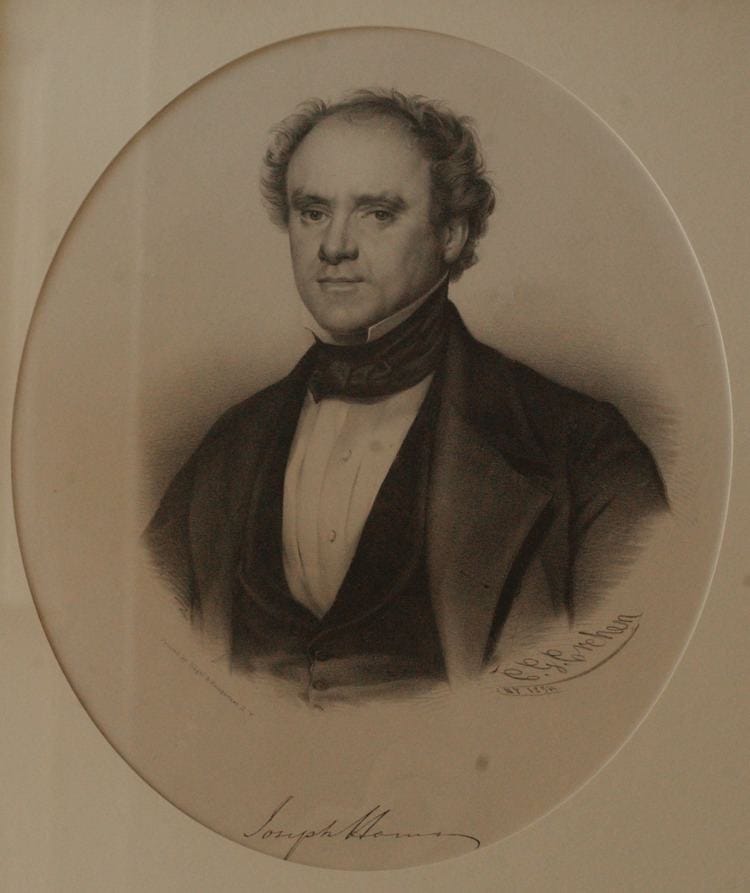
Nova Scotia and the Canadas were among the first serious modern democracies.
This is not the place to go through all that was wrong in the system. It was a rough and tumble democracy! The new government - “The Great Ministry” - set about passing hundreds of laws which remain today as the deep foundations of Canada’s democratic system.
In short - what they sought was greater and broader justice.
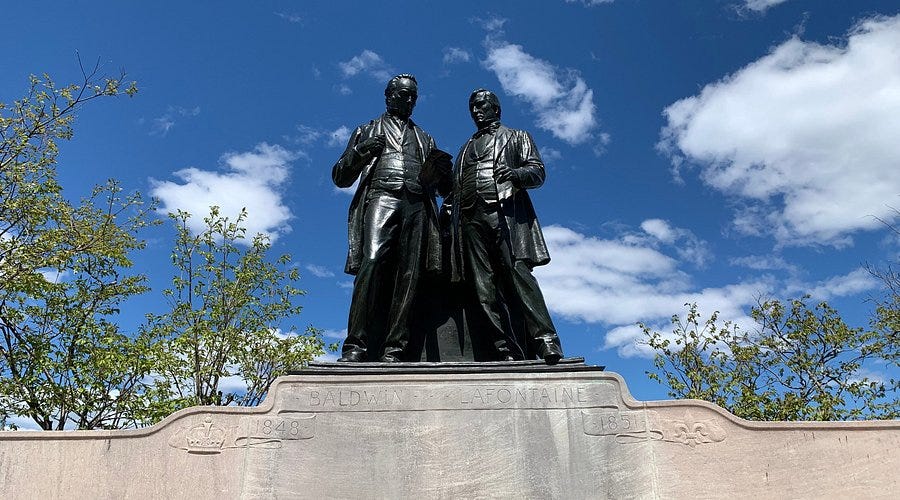
LaFontaine had launched this political revolution eight years before with the publication of his Address to the Electors of Terrebonne. It was not a crude political proposal. He called instead for a new level of shared justice. Cooperation between Francophones and Anglophones could only work – both he and Robert Baldwin believed – if it were based on principles.
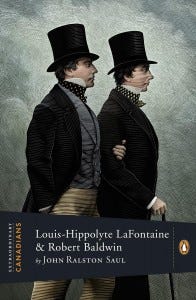
“We must employ all the means in our power to equalize the ranks of society, to wrest from Government all hope of establishing in this country an aristocratic power centre.”
He called for public schooling. For responsible immigration. “Canada is the land of our ancestors; it is our country as it must be the adopted country of the various populations which come from diverse portions of the Globe. Like us, their paramount desire must be the happiness and prosperity of Canada, as the heritage, which they should endeavour to transmit to their descendants…. Above all, their children must be like ourselves, CANADIANS.”
“We will secure to ourselves political liberty, the enjoyment whereof we cannot be debarred from so long as social equality continues to be as it now is, the characteristic feature of the populations of Upper and Lower Canada. For that equality must necessarily lead to political liberty… No privileged caste, beyond and above the mass of the people can exist in Canada.”
This is the basis upon which Canada became a democracy.
Were these standards of equality maintained? No.
But this was the ethical aura in which we made the step forward to a democratic life.
It is essential not to forget that. And just as important not to put aside the aspirations of 1848.
Wonderful to read this well written little summary , especially in these crazy world times. Uplifting! As I comment, I see all the little trolls parsing out your sentences ( like any media ) but I for one loved this , and appreciated the spirit of this reminder NOW.
Canada is not perfect , but a welcome priority is to focus on how much our love of country matters. All the rest can be sorted- we have a system of governance that allows for this.
Thank you !
For those wondering "how did this happen", I'd suggest they read John Ibbitson's book, "Duel, Diefenbaker, Pearson and The Making of Modern Canada". It's as much a history book as it is a story about two prime ministers.