
The GG

More thoughts on the role of the Governor General.
The Governor General is not the representative of the King. That is a very old-fashioned colonial idea which has no place in today’s Canada.
Yes, yes, the Constitution suggests the opposite. But the Canadian Constitution has always been difficult to understand in any practical sense. It says many things it does not exactly mean, just as the old BNA Act did.
- - -
We have a long history of obscure constitutional truisms. Which often aren’t true. Or are temporary truths. Or convenient positions.
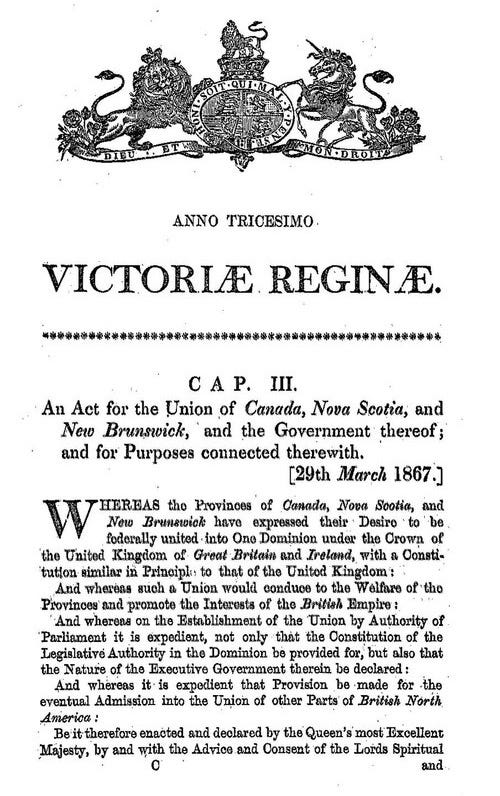
For example, the BNA began by declaring that Canada was a Dominion. This was meant to be a central and important point.
Why? Because the Fathers of Confederation had begun their independence negotiations in London in 1866 by demanding that Canada be called the Kingdom of Canada. Why? Because as a Kingdom, Canada would be equal to England and therefore completely independent.
The British negotiators refused.
Why? Well, remember, Canada was the first European/British colony to negotiate for independence since the U.S. colonies broke away 91 years before. Yes, the Canadian negotiations were peaceful. But they were also a revolutionary innovation.
For the British government, some sort of independence was one thing. Equality with Britain was quite a different matter.
The fallback position was Dominion of Canada. Why? Because the Canadians knew their bible, probably a lot better than the urbaine British negotiators. For the Canadians, the biblical origins of ‘Dominion’ were all about power, therefore independence.
‘Dominion’ came from Psalm 72:8: “He shall have dominion also from sea to sea, and from the river unto the ends of the earth.”
It also came from Zachariah 9:10: “And his dominion shall be from sea even to sea, and from the river even to the ends of the earth.”
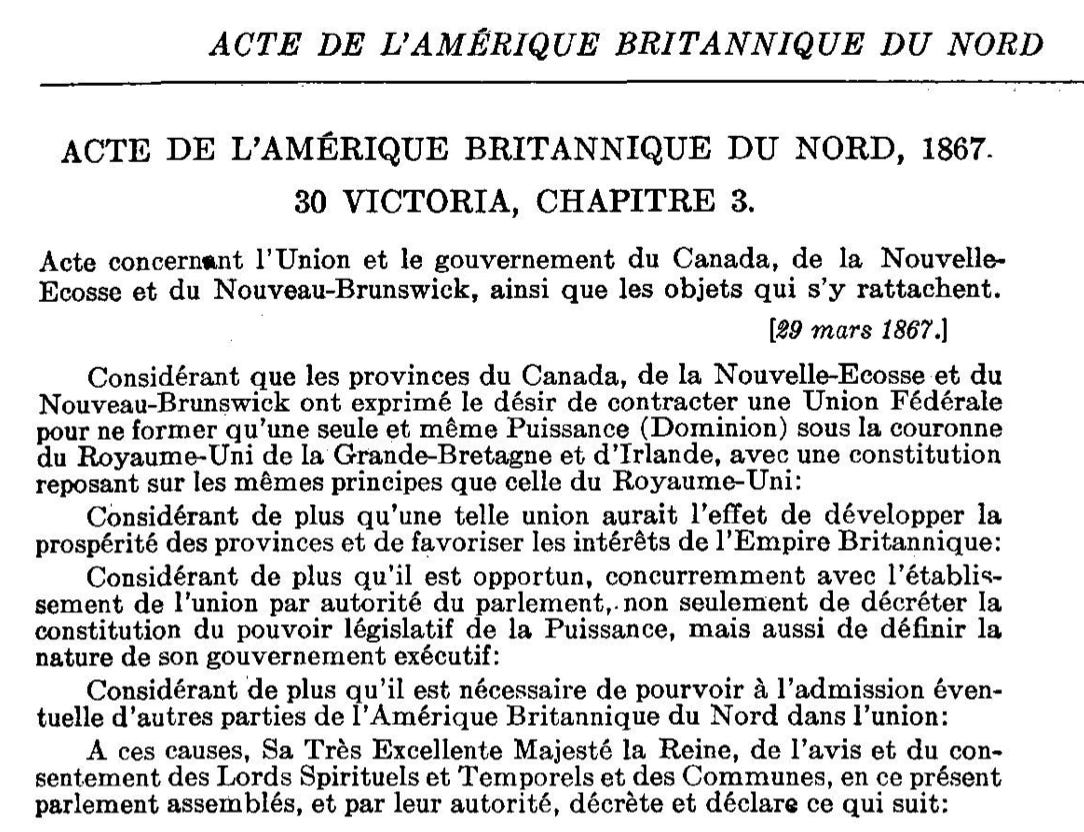
But the key intentional bit was in French. Again, Zachariah 9:10. It read: “Et sa puissance s’étendra depuis une mer jusqu’à l’autre mer, et depuis le fleuve jusqu’aux extrémités du monde.”
PUISSANCE. Power.
That’s right. The BNA was bilingual and it was clear. The French version had as much constitutional meaning as the English. The Dominion of Canada in French was La Puissance du Canada. That’s right. Canada was born as La Puissance du Canada. The Power of Canada. A Dominion and a Puissance. This was made clear in English and French in the first and third paragraphs of the BNA.
Two important details in those London negotiations:
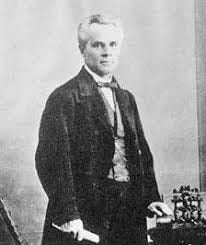
Macdonald was the negotiator. He was a master at arguing the details. And he read French fluently. For years George-Étienne Cartier had been passing him French novels, which he loved to read.
Cartier was the master of text. He understood the relationship between French and English. And the BNA was in both languages, each carrying equal legal importance. The Dominion was La Puissance. Therefore, the meaning of ‘Dominion’ was clear. It was all about power and independence.
Conclusion: If you are wondering what the Canadian negotiatiors understood before they accepted being called a Dominion, the official French version gives you the full intended meaning from the biblical Latin: “potestas.”
“Dominion” or “Puissance” was the original way to make a statement of power and independence.
- - -
These are not technical details. I repeat – Canada was the first colony after the U.S. rebellion – about 90 years before – to try for independence. Canada was the first of the English and European colonies to reinvent itself as a nation state. And the Canadian leaders understood that negotiation was the intelligent way to go. They were negotiators not soldiers. So there was lots of room to create new formal language. In fact, it was necessary.
The problem was that London didn’t like this originality. Once the deal was done, the imperial leaders and managers set about debasing the word Dominion by using it for every ex-colony. Let’s call it: inflationary devaluation. And they pretended there was no French version. No legal term Puissance.
Canadians eventually came to believe this imperial version of their own story – that the BNA existed only in English. That there was no such thing as La Puissance du Canada. Therefore, that the BNA included no mention of ‘power’ as a sign of independence.
So ‘Puissance’ gradually disappeared, leaving only ‘Dominion,’ which declined into a colonial term.
The result? Well, it took a while, as Canadians made enormous contributions and sacrifices in two world wars, while the imperial powers sucked up the credit and the advantages.
In 1951, the government of Louis St. Laurent simply stopped using the devalued term. There was no constitutional amendment. No law was passed by Parliament. The term Dominion simply disappeared from bills, laws and public discourse. The Canadian government stopped using the word because its meaning had lost its dignity and was therefore undermining Canada’s international reputation as an independent power.
- - -
I tell this story because it highlights how empires deform history to suit their own interests and their own version. The version in which they are the Hero. They alone are heroic! Everyone else is just a colony or an ex-colony.
Remember! At that time the British Empire was the most powerful imperial force in the world. And they used their English language to reinforce their administrative and military power.
That same sort of context shapes the story which tells how the role of the GG was often manipulated in order to create a false understanding of how it worked.
It took quite a while for the Ottawa-London uncomfortable deal of the 1860s to settle into the formalized public independence we now take for granted. Along the way the Governor General gradually began functioning as the de facto Head of State of Canada.
There was no formal change in language. That might have created a crisis. The GG simply evolved into the working Head of State of Canada.
Today, the GG fulfills that role in its entirety, and has for a long time.
- - -
Now let me be clear about four practical details:
The Governor General does not speak with the monarch about the Canadian role/job. Never.
The Governor General does not seek advice from the monarch. Never.
There is no working relationship between them.
The monarch knows this and therefore makes no public or private comments which are not written for him by Canada’s authorities.
I make these four points because they are never laid out by Canada’s leaders. It is as if they don’t want the citizenry to understand how our democratic system actually works. As if they fear clarity.
In other words, yes, the King is constitutionally the monarch. But the King has no practical role in the functioning of Canada. He can be brought out from time to time, when it is useful, as the government of the day sees fit. Long periods of time may go by without the government wishing to do so. Decades!
And whether the monarch is brought out or for show or not, the Governor General is at all times the de facto Head of State. AT ALL TIMES. Whether the monarch is visiting the country or not.
- - -
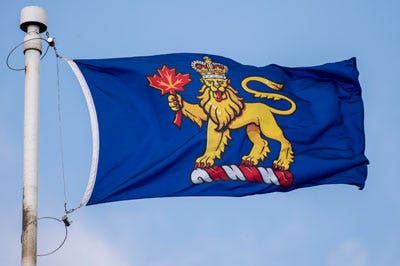
A helpful description of the historic and actual role today of the Governor General would be to describe the GG as the defender of the Canadian Crown, just as the King is the defender of the British Crown.
The Crown is not a person. Yes, in Britain there are various crowns made out of various precious metals. But the Canadian Crown does not require a nice metal hat of gold or silver or platinum, studded with jewels of colonial origin, to put on someone’s head.
What is that Crown? The Canadian one? What does that word – Crown – mean?
It is an abstract representation of the country, of the people, of its history and its culture – and of course of its written and unwritten constitutional systems.
The Crown is an abstract theory of governance.
You could actually have the Canadian Crown without the monarch.
That’s right.
The Crown is an abstract expression of legitimacy. ‘The Crown does this or that,’ ‘Crown Land,’ ‘Crown Attorney,’ etc.
All countries tend to have a central physical symbol of their legitimacy; that is, the symbol of something physical. It may be a prehistoric stone. Or a plaque. Or an ancient cross. Or a book. Or a document. Or the abstraction of a crown.
- - -
Remember – Canada is the oldest continuous democratic federation in the world and one of the two or three oldest continuous democracies in the world.
CONTINUOUS! That is the key word. Why should we interpret phrases or words, such as the Crown, in such a way as to diminish our standing as a country? A G7 country. A founder of the UN and of NATO.
The use of terms evolve over time. When we ask today – ‘What is the Canadian Crown?’ – there are many answers. For example, the Crown is now millions of hectares of land. Crown land. When we talk of the Canadian Crown, we are not making a reference to the monarch. We are referring to the legitimacy of the Canadian state.
- - -
So it is the GG’s job to represent, at the Head of State level, the place and the people of Canada. And as Commander-in-Chief, it is the GG’s job to represent the defence of Canada.
All of that explains why the job is so complex and important for Canadians.
- - -
Language has meaning.
Words matter.
Usage of words requires an element of precision in purpose.
Insightful commentary.
Very very helpful. “The crown as an abstract concept of governance. “ subtle point. Easy to miss 🙏